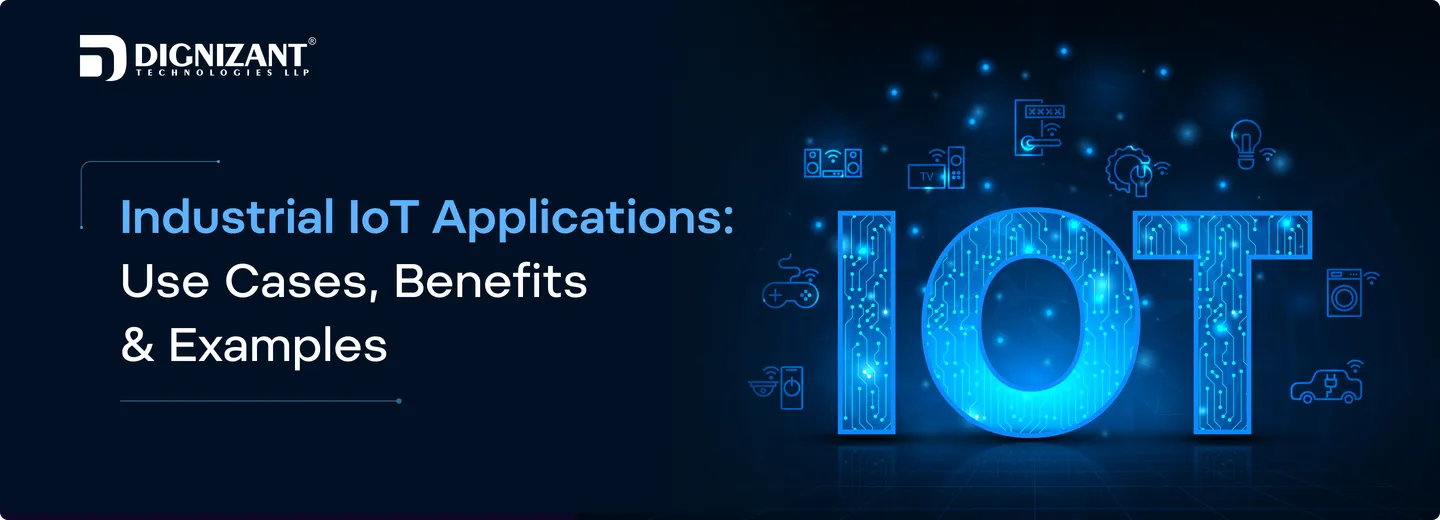
Industrial IoT Applications: Use Cases with Real Examples
Contributor
Palash Pandya
Uploaded
5 May, 2026
Read Time
12 Minutes
Views
70 views
A lot of factories and companies struggle with working fast, saving money, and solving problems quickly. Machines can fail abruptly, and it can be hard to understand what is going wrong. That’s where Industrial IoT Applications come in. IoT stands for Internet of Things, where machines, tools and devices communicate with each other and share data. In this blog, we will show how these smart connections enable industry to work more efficiently, reduce down time and become better at running day-to-day business.
This blog will also cover simple use cases, advantages and application examples for IoT, particularly for the manufacturing industry. You will see how IoT makes it easier to check on machines, conserve energy and get work done more quickly. You'll see common challenges that the Industrial IoT solutions of today are able to solve, and gain a new understanding of how you can foster business growth smartly through the use of these solutions.
What is the Industrial Internet of Things?
The IIoT is a subset of the Internet of Things (IoT) and it is related specifically to the industry and factory floors. These data-savvy machines are collecting and sharing information, providing companies with real-time visibility into their operations. That’s what makes people find problems early and fix equipment fast and the workflow makes everyone’s job easier. IIoT applications for the monitoring of machine status, goods tracking, and energy savings in plants are becoming increasingly popular.
Back in the day, factories were straightforward and relied on dumb machines that didn’t talk us anything useful. Everyone needed to work by hand, which wasted time and sometimes caused bottlenecks or mistakes. Sensors and computers were added to machines as technology advanced. This gave rise to the Industrial Internet of Things (IIOT). With solutions from IIoT, they can potentially speed up the process, reduce expenses, and make more informed decisions with real-time data.
Top Industries Using IoT Applications
Today, many industries are making use of smart devices that allow them to complete their work quickly and conveniently. These can communicate with one another and exchange data. This allows people to know what it's going on and fix the problem promptly. Time, money and energy is saved with the help IoT technology in a lot of respects.
Manufacturing Industry
In factories, IoT in manufacturing enables machines to remain connected and exchange data. Instead of breaking down unexpectedly, machines can let you know they need maintenance work doesn't get interrupted. This helps produce goods faster and with fewer errors. Employees can also access all the information from one place, bridging the process and ensuring safety.
Healthcare Industry
In the field of healthcare software development contributes in a significant way to the working of IoT in hospitals and in managing patients. You can have your smart devices to monitor health indicators such as heart rate and body temperature.
Transportation and Logistics Industry
At the receiving end of IoT is the logistic software development in delivery and transport solutions. Companies get to know where things are and when they will get there. This results in faster deliveries, fewer delays and safer goods.
Energy & Utilities Industry
IoT assists in the management of electric, water, and gas utilities. Smart meters monitor consumption and help to conserve. This conserves energy and reduces the cost of the systems when they are more reliable.
Oil and Gas Industry
IoT assists in pipeline and equipment monitoring. It can detect issues early on and stop accidents. This increases worker safety and productivity.
Construction Industry
In construction applications, real estate software development using IoT knows the exact location of tools workers and the site progress in building projects. Supervisors can track real-time progress and maintain security. It enables you to get projects done quickly and better.
Automotive Industry
Cars are using IoT to become smarter. They can alert, track performance and enhance security. This allows drivers to have a smooth and safer trip.
The Core Benefits of industrial internet of things applications
The Industrial Internet of Things (IIoT) enables machines, devices and assets to collaboratively work. It provides a way to get work done easily, quickly and safely. Organising their workspace before beginning on the day-to-day task means the industries can quickly address issues and enhance their daily work through use of Industrial IoT applications and different variants of IoT.
More Efficiency and Faster Work
One of the main advantages of Industrial IoT use is increased efficiency. Machines are able to exchange information in real time, so work progresses ever faster and easier. They are doing less waiting and completing jobs faster. It enables them to manufacture more in less time and achieve better overall results.
Predictive Maintenance and Less Downtime
IIoT applications help machines tell when they need repair before they break. This maintenance strategy is called predictive maintenance. It avoids sudden machine breakdown and minimizes its downtime. Hence, the industries get to save their time and keep the work running without any distractions.
Efficient resource use and cost saving
By using IoT applications, industries have been able to make out resourceful usage of energy, water and raw materials. Intelligent systems track consumption and reduce waste at the source. It enables them to save money and be responsible with their resources.
Increased Safety and Security
Industrial IoT solutions contribute working security/safety. Sensors monitor dangerous conditions, such as high temperature or gas leaks, and send alerts. It allows for rapid intervention and prevention of accidents. That way, it’s safer for everyone who works there.
Better Decision Making with Real-Time Data
IIoT applications collect and show data in real time. Managers can see what is happening and make quick and smart decisions. This helps improve planning and reduces mistakes in daily operations.
Higher Product Quality
With smart monitoring, industries can check product quality at every step. If there is any issue, it can be fixed quickly. This helps in making better products and keeping customers happy.
Remote Monitoring and Control
Industrial IoT applications allow people to check machines from anywhere. Workers and managers can control systems without being on-site. This makes work more flexible and easier to manage.
Challenges of Industrial IoT System Development
Manufacturing intelligent systems with the Industrial Internet of Things is great, but not always easy. A lot of industry experience difficulty when developing and operating such smart systems. While industrial IoT solutions make work better, there are some obstacles businesses still have to overcome.
High Setup Cost
One of the biggest challenges is the high cost. Firms have to purchase new machinery, sensors and software to develop industrial iot products. Then there’s the money they’ll need to shell out for installation and training. It can be very costly for a small business and difficult to keep many hats flying in the air.
Data Security and Privacy Issues
IoT collects vast amounts of data from machines and devices. It’s very significant information, but it can be at risk if it isn’t well protected. Hackers might attempt to make off with your data or compromise it. Hence, companies need to develop robust security systems to protect the good work they have achieved.
Complex System Integration
Most already use ancient machines and systems. Integrating these legacy systems with new IoT technology is a challenge. Making it all work together smoothly takes time and energy. This is why companies frequently turn to the experts, such as a bespoke software development company, to create the right solutions.
Lack of Skilled Workers
Certainly not all employees are familiar with IoT systems. Industries require educated individuals who can work with data, devices and software. Locating and training experienced employees can be difficult and time consuming.
Maintenance and System Updates
IoT systems require frequent updating and maintenance for optimal performance. If you don’t update your systems, they can become slow, and unsafe. It Was Time-Consuming To Keep Everything Up To Date And It Took Some Planning and Doing.
Industrial IoT Application Use Cases
Industrial IoT enables machines and devices to operate intelligently. It simplifies work, quickens the pace of work, and ensures the safety of work. These intelligent systems are used on a daily basis by many industries to address challenges and streamline operations. The following are examples of IoT in industry use cases.
Predictive Maintenance
Machines know when they are likely to break. The condition of machines is constantly monitored by sensors. The system will early warn if anything is wrong. This allows the operator to repair the problem before the machine comes to a stop. It has the potential to save time, decrease the amount recourse put into repairs, and keep the flow of work moving.
Smart Manufacturing
In factories, IoT helps machines talk to each other. They share data and work together in a better way. This makes production faster and reduces mistakes. Many companies use help from a saas based product development company to build smart systems that improve factory work.
Tracking and management of assets
IoT for tracking equipment, tools, machines, and goods in real-time. Companies always know where their items are. This minimises the loss and helps manage. It also helps in better planning and smoother operations.
Managing Energy
Smart sensor monitors energy consumption of equipment and buildings. They also help to save on unnecessary energy. That’s good for the wallet and the environment. Wasted energy are easily identifiable and can be easily rectified in companies.
Monitoring at a distance
Operators can monitor equipment at remote locations through IoT-enabled systems. They don’t have to be in the factory all the time. So it makes your job easier and more flexible. Problems can be detected and fixed promptly, even remotely.
Optimization of the supply chain
IoT tracks products on the road. Companies can track where their products are and see when they will arrive. This reduces late and increases delivery time. Also for your business, so you can provide your customers with services that are just as good.
Top 8+ Industrial IoT Applications Across all Industries
The IIoT enables machines and systems to behave intelligently. What it does is link devices so that they can communicate and relay information, making the work easier and faster. These intelligent applications are known as Internet of Things industrial solutions which are making so many industries expand and evolve now and then.
1. Predictive Maintenance
This is one of the most valuable iiot applications. Machines have sensors that check their own health constantly. If something is not right, the system alerts in advance. This can identify problems before equipment is faulted. It keeps you from wasting time and money on unnecessary repairs, which is a good thing.
2. Smart Manufacturing Automation
Work is automated with IoT in factories, without much human labour. Machines are able to communicate with one another and carry out functions automatically. This is a key application of industrial Internet of Things that helps make products faster and with fewer mistakes. It also improves quality and productivity.
3. Asset Tracking and Management
IoT enables us to monitor machines, tools and products in real-time. Now the companies can know where everything is at any given time. This reduces loss and improves planning. IoT applications development for industry that makes operations smooth and organized.
4. Energy Management Systems
Smart sensors measure energy usage in machines and buildings. They help locate where energy is being wasted. This allows businesses to save money and energy more efficiently. It also advocates green living.
5. Remote Monitoring and Control
People can now monitor machines anywhere over the Internet using IoT technology. They don’t need to be in the factory all the time. That makes work flexible and convenient. Troubleshooting can be done promptly and even from afar.
6. Supply Chain Optimization
IoT allows goods to be tracked in transit. Organizations are informed of the location of their products and their expected delivery dates. It reduces delivery time and increases supply. It enables companies to serve customers better.
7. Quality Control and Monitoring
At every stage in the production process, IoT solutions monitor the quality of the product. If something goes wrong, the trouble spot is identified quickly. This allows for early problem detection, better products. It also reduces the waste and increases the satisfaction of the customers.
8. Workplace Safety Monitoring
Sensors can perceive hazards such as gas leaks, high temperatures, or unsafe environments. They are alerted promptly to keep the workers safe. This also contributes to a safer working environment and a decrease in workplace injuries.
9. Industrial Automation Systems
IoT enables machines to operate automatically with minimal human intervention. These include emerging IoT solutions in industrial automation that speed up processes with greater precision and efficiency. It helps them to grow faster and remain competitive.
Real-Life Examples of IoT in Industrial Applications
Industrial IoT is not just a concept, it's already being used by plenty of big companies to make work easier, save time, and prevent issues. These real-world applications demonstrate how connected devices and systems are changing the way industries work for the better, day after day.
GE (General Electric) – Predictive Maintenance
GE employs IoT sensors in machinery such as turbines and engines. These devices constantly monitor machine health and gather data. In case of malfunction, the system sends an early alert. This goes a long way to preempt repairs before a breakdown. It is both cost-effective and keeps the business running without hitches.
Siemens – Smart Manufacturing
Siemens employs IoT in its factories to link up machines and processes. All machines are networked and they intelligently share and work together. This can help decrease mistakes and increase the pace of production. They also can oversee everything with ease, making their work on the factory floor more productive and less hectic.
DHL - Smart Logistics and Tracking
DHL implements IoT to monitor shipments and deliveries. Gadgets and tracking devices display the real-time position of the products. This enables the company to track where the packages are and when they will arrive. It's faster delivery, less loss, and better service for customers.
Future Trends in Industrial IoT Applications
The industrial IoT is growing rapidly and reshaping industries. The smart machines of ever-evolving will be intelligent and useful. People will benefit from this, whether you're a city worker or a courier. So here are some pretty big IoT future trends in industry.
Smarter Factories with Automation
In the future, factories will be filled with even smarter machines that can operate autonomously. In manufacturing with iot, machines would communicate with each other and take immediate actions. This will focus on increasing production rates and decreasing the amount of human labor on a line. Fewer errors and greater efficiency to the factories.
Stronger Industrial IoT Security
With the increasing number of devices connecting to the internet, keeping them safe will be critical. Industrial IoT will be much more secure with the introduction of newer mechanisms that will protect data from hackers. These companies will also have state- of-the-art security solutions to protect these machines and data, around the clock.
Use of Artificial Intelligence (AI)
IoT solutions will work with AI to become smarter. They are not simply collecting data, but also understanding and acting on it. It can help industries to foresee problems, improve quality and save time. They may hire a business like an AI ML development company to develop intelligent, smart solutions.
More Use of Cloud Technology
Cloud platforms will simplify data storage and management of massive datasets. Business people will be allowed to retrieve data anytime from anywhere. This will make controlling machines and systems from a distance much easier.
Digital Twins Technology
Digital twins are virtual copies of real machines. Companies can test and monitor machines in a virtual space before making real changes. This helps reduce risks and improve performance.
More and Better Connectivity with 5G
As a result of faster internet speed such as 5G, IoT devices will be connected more rapidly and seamlessly. This in turn will speed up sharing data in real time without delay. Sectors will be able to operate with more speed and efficiency.
Conclusion
Applications for Industrial IoT enable smart and simple interaction between machines and people. This guide gave you the takeaways like use cases, benefits, challenges, and a real example to clearly understand how IoT helps growing industries and solve problems. Work is faster, safer, and more efficient in fields as diverse as manufacturing, healthcare and logistics. You will be able to use this guide to get the best results from planning or using IoT in your business. With proper guidance from experts such as Dignizant Technology, you can create intelligent solutions and enhance your work in the simplest, most effective way.
Latest Articles
What it actually takes to build a Next.js app: real cost bands, timelines, team setup, and when to hire an agency instead of building it yourself.
Hiring a Next.js development agency? See scope, timeline, real cost bands, and questions to ask before you sign a contract with anyone.

Learn how to build a Next.js project step by step, when to hire help, and realistic cost and time ranges for different project sizes.
FAQs
Ready to Take Your Business to the Next Level?
Unlock new opportunities with expert solutions designed to elevate your brand. From strategy to execution, we empower your business with the tools, technology and talent it needs to thrive in today’s digital world.