Digital Wallet App Development for Secure Payments
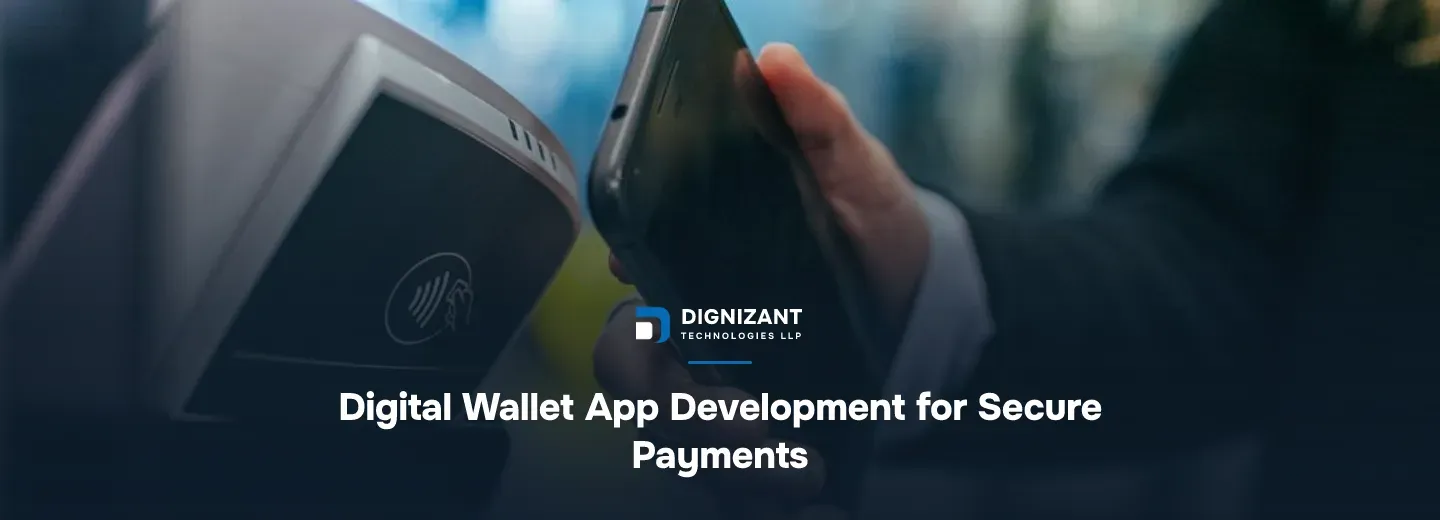
Photo by Jonas Leupe on Unsplash
Uploaded
less than 20 seconds ago
Read Time
9 Minutes
Views
0 views
Digital wallets have quietly become the default way people pay. Tap to pay at a coffee shop, send money to a friend, store a loyalty card, check out on an app in two seconds instead of typing a card number. If you run a startup, an SME, or a SaaS business and you are weighing whether to build a digital wallet, you are not asking "is this a good idea." You already know it is. You are asking what it actually takes, what it costs, and how to avoid the security mistakes that sink fintech products before they get traction.
This page is that answer, written the way the team at Dignizant Technologies LLP would explain it to a client sitting across the table from us.
What a digital wallet app actually needs to do
A digital wallet is not one feature. It is a bundle of capabilities that have to work together without a single weak link, because money and personal data are both moving through it.
At minimum, a production-ready wallet app includes:
- User onboarding and KYC (know your customer) with ID verification
- Secure authentication: biometric login, PIN, and multi-factor authentication
- Linked payment methods: bank accounts, debit or credit cards, sometimes crypto
- Peer-to-peer transfers between users inside the app
- Merchant payments via QR code, NFC tap, or in-app checkout
- Transaction history with searchable, exportable records
- Notifications for every transaction, login, and balance change
- Card or account management, including freezing a lost card instantly
- Customer support built into the app, not just an email address
Some wallets add more: bill splitting, recurring payments, loyalty points, currency conversion, or a rewards program. Each of those is a real feature with its own design, backend logic, and testing cycle, not a checkbox you add for free. When Dignizant Technologies LLP scopes a wallet project, we separate this list into "needed at launch" and "needed eventually," because treating every feature as day-one scope is the fastest way to inflate a budget before a single user has touched the app.
Security is the product, not a feature of it
With most apps, security is one consideration among many. With a digital wallet, security is the product. If a user does not trust it with their money, nothing else about the app matters.
Our own engineering team's take: the wallet projects that go wrong are almost never the ones with too little security. They are the ones where security was bolted on after the core app was built, instead of designed in from day one. Retrofitting encryption, tokenization, and fraud detection into an already-built payment flow costs more time than building it in correctly the first time, and it leaves gaps that are hard to find in testing.
A wallet app built to a serious standard includes:
- End-to-end encryption for data in transit and at rest
- Tokenization so raw card and bank details are never stored directly in your database
- PCI DSS compliance if the app handles card payments directly
- Biometric and multi-factor authentication as standard, not optional
- Fraud detection logic that flags unusual transaction patterns in real time
- Session timeouts and device binding so a stolen phone is not a stolen wallet
- Regular penetration testing, not a one-time audit before launch
The Payment Card Industry Security Standards Council publishes the PCI DSS framework that most card-based payment systems are measured against, and it is worth reading even in summary form before you scope a wallet project, because it shapes decisions about where data lives and who can touch it. Dignizant Technologies LLP builds this checklist into discovery rather than treating it as a pre-launch audit item, so the architecture does not need surgery six months in.
A wallet that stores raw card numbers in its own database is not a shortcut. It is a liability that turns into a breach notice the first time someone finds it.
The build process: how this actually comes together
A digital wallet is not built in one pass. It goes through five stages at Dignizant Technologies LLP, and skipping any of them is how projects end up rebuilding things they should have gotten right the first time.
- Discovery. We map out exactly who the user is, what they need to do first, which payment rails you are connecting to, and what regulatory requirements apply in your market. This stage also decides whether you need a full KYC/AML flow or a lighter version, which changes the budget significantly.
- Design. Wallet UX lives or dies on clarity. Every screen that touches money needs to be instantly understandable, because a confused user in a payment flow either abandons the transaction or makes a mistake. We design the flow before we design the visuals.
- Build. Backend first: ledger logic, transaction processing, API integrations with payment gateways and banking partners, security layers. Frontend follows, built against a working backend rather than a mockup, so what you test is what you ship.
- Launch. This includes app store submission (which has its own review standards for finance apps), payment gateway certification, and a phased rollout rather than a full public release on day one.
- Support. Wallets need ongoing monitoring for fraud patterns, regulatory changes, and payment gateway updates. This is not optional maintenance, it is part of keeping the product legally and financially sound.
If you are building the wallet as a feature inside a broader mobile app rather than a standalone product, it helps to start from a team that already understands the wider mobile build process. Dignizant Technologies LLP's mobile app development work follows this same five-stage approach, which keeps a wallet feature consistent with the rest of the app instead of feeling bolted on.
What it costs and what actually moves the number
Dignizant Technologies LLP will not tell you "it depends" and leave it there. Here is how the math actually works.
A wallet app is built on an hourly basis, and a realistic blended rate for this kind of work, scoped properly with experienced developers, lands in the $10 to $15 per hour range in markets where this work is commonly outsourced. The total cost comes from multiplying that rate by the hours a project of your scope genuinely requires, so the range widens or narrows based on what you are asking for.
Wallet type | What it includes | Estimated hours | Realistic cost band |
|---|---|---|---|
Basic P2P wallet | Send/receive money, one bank link, PIN login, transaction history | 500 to 700 hours | $5,000 to $10,500 |
Standard consumer wallet | P2P transfers, merchant QR/NFC payments, biometric login, multiple linked accounts, notifications | 900 to 1,300 hours | $9,000 to $19,500 |
Full-featured wallet | Everything above plus KYC/AML flow, fraud detection, loyalty or rewards, multi-currency, admin dashboard | 1,600 to 2,400 hours | $16,000 to $36,000 |
Enterprise or bank-grade wallet | Custom core banking integrations, advanced compliance, white-label capability, dedicated security audits | 2,800+ hours | $28,000 and up |
What pushes a project toward the top of its band:
- Number of payment gateways and banking APIs you need to integrate
- Regulatory scope: a single-country launch is far simpler than a multi-region one with different KYC rules per market
- Custom fraud detection built specifically for your transaction patterns, versus using a third-party service
- Design complexity, especially if you want a distinct visual identity rather than a standard fintech layout
- Admin and reporting tools for your internal team, which often get underestimated at the quoting stage
What keeps it toward the lower end:
- Using established payment gateway SDKs instead of building raw banking integrations from scratch
- Launching in one country or region first and expanding later
- Starting with a lean feature set and adding loyalty, multi-currency, or advanced analytics after you have real users
When Dignizant Technologies LLP quotes a wallet project, we show you which line items drive which hours, so the number you sign off on is tied to a feature list you chose, not a flat package you are guessing about.
A basic wallet and a bank-grade one are not the same product wearing different clothes. The jump from $10,000 to $30,000 is usually the KYC, compliance, and fraud layer, not visual polish.
How a wallet app is different from a general eCommerce payment flow
Businesses sometimes come to Dignizant Technologies LLP asking for a "wallet feature" when what they actually need is a stored-payment checkout inside an existing shopping app. Those are related but not the same build, and quoting them as if they were is how budgets go sideways early.
| eCommerce stored payment | Standalone digital wallet |
|---|---|---|
Primary use | Faster checkout on one platform | Store, send, and spend money across contexts |
Compliance load | PCI DSS for card storage | PCI DSS plus often KYC/AML |
P2P transfers | Not usually needed | Core feature |
Multi-merchant use | No, tied to one store | Yes, by design |
Typical cost band | Often folded into the storefront build | Standalone $5,000 to $36,000+ as above |
If what you actually need is the first column, Dignizant Technologies LLP's eCommerce app development team builds stored-payment and one-click checkout flows as part of the storefront itself, which is usually faster and cheaper than scoping a full wallet.
Timeline: what to expect from kickoff to launch
- Basic P2P wallet: 3 to 4 months
- Standard consumer wallet: 5 to 7 months
- Full-featured wallet with KYC and fraud detection: 8 to 11 months
- Enterprise or bank-grade wallet: 12 months or more, largely driven by compliance review cycles, not development speed
Payment gateway certification and bank integration testing often take longer than the engineering itself, so Dignizant Technologies LLP builds that into the project plan from the start rather than treating it as a surprise near launch.
Quality and communication: how this should actually run
A fintech build is the wrong place for vague status updates. Working with Dignizant Technologies LLP, you should expect, at minimum:
- A working staging environment you can log into and test at any point, not just at milestones
- Weekly progress updates that name specific features completed, not general percentages
- Security testing documented in writing, including what was tested and what was found
- A clear data handling policy covering what user information is collected, where it is stored, and who can access it
That last point matters enough that it should be written down and shared with you, not just assumed. Dignizant Technologies LLP's own Privacy and Policy sets out how we handle data on our side, and any wallet project should have an equivalent document specific to the product before it ever reaches a real user's phone. Engagement terms, scope, and ownership should also be written plainly rather than buried in a contract; Dignizant Technologies LLP's terms and conditions are built to be read, not just signed.
Starting your wallet project with Dignizant
A digital wallet is one of the few app categories where cutting corners shows up immediately, either as a security incident or as a user who does not trust the app with a second transaction. Building it right the first time, with security and compliance designed in from discovery rather than patched in before launch, is the difference between a wallet people use once and one they keep coming back to.
Dignizant Technologies LLP builds digital wallets end to end, from the first discovery conversation through launch and ongoing support, for startups, SMEs, and SaaS businesses that need a payment product people can actually trust. If you have a wallet concept, a specific feature list, or just a rough idea of what you want users to be able to do, reach out to Dignizant Technologies LLP and we will scope it honestly, with real numbers, before any work begins.
Enjoyed this? Subscribe to our newsletter for more like it, straight to your inbox.
Latest Articles
What Flutter app development actually costs, what changes the price, and how to hire the right team. A clear, current pricing guide.
A current guide to digital wallet app development: features, security, timeline, and real cost bands for startups and businesses building one.
A clear look at what Dignizant Technologies LLP builds, how the team works, realistic costs, and how startups and SMEs can get started.
FAQs
Ready to Start Your Project?
Talk to our team about turning this into a real, working product.