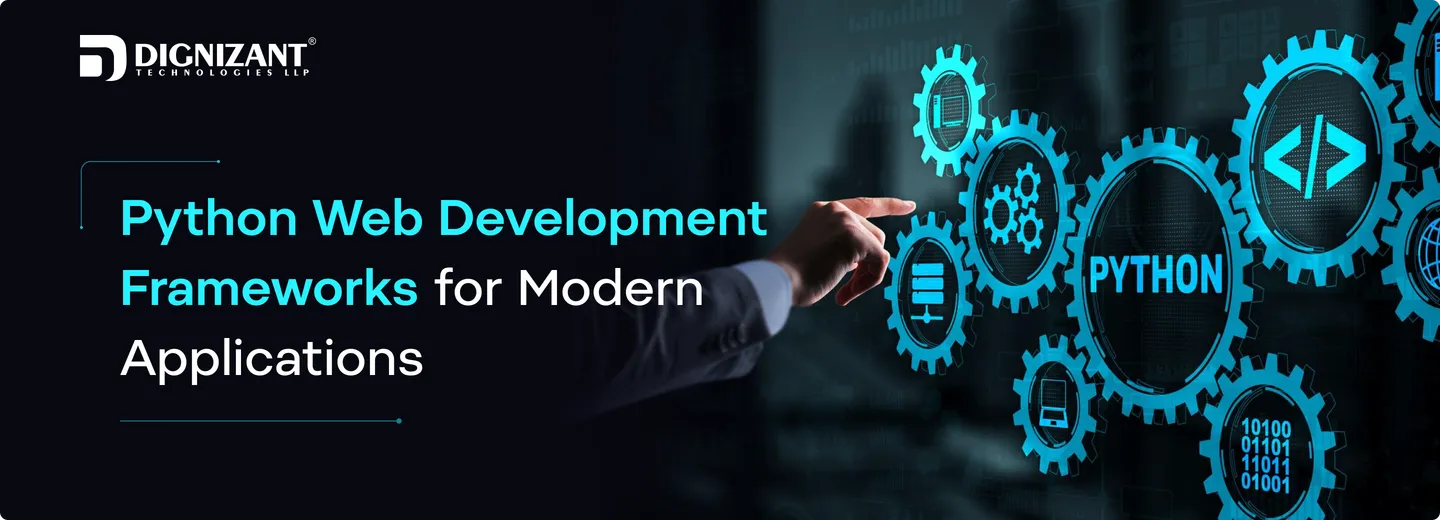
Python Web Development Frameworks for Modern Applications
Contributor
Arjun Solanki
Uploaded
5 January, 2026
Read Time
5 Minutes
Views
34 views
Python has evolved far beyond a scripting language. Today, it sits at the core of modern web application development, powering everything from lightweight APIs to large-scale enterprise platforms. Python has a rich web coding ecosystem with several amazing Python web development frameworks that solves different complex architectural, performance and scaleable problems.
The Python web development framework you decide on is more than a simple technological attitude. It’s a strategic selection that impacts your work rate, long-term management, security position, and capability to scale as you develop the application. This article goes over the Python web development frameworks with today’s viewpoint, showcasing their best firefox capabilities, areas that involve various compromises, and how well matches the substantive needs of a modern application.
Why Python Is a Natural Fit for Modern Web Applications
Modern applications require much more than basic request-response processing. They need this, but also real-time capabilities, API-first design, cloud readiness, solid security model and seamless integration with data and AI layers. Python naturally integrates in this environment for various reasons:
- Good and expressive syntax, the cognitive overhead is less for development teams
- Read more libraries created for web, data processing, machine learning and automation among others
- Solid community support makes it stable in the long run and brings updates regularly
- Industry-agnostic usage, such as startups and heavily regulated enterprises
This is where Python really shines when you marry these strengths with the best framework.
Understanding Python Web Development Frameworks: Full-Stack vs Microframeworks
Before comparing any specific frameworks, let's be clear about a misconception: bigger frameworks are not necessarily better and the smaller ones are not always easier to maintain.
Full-Stack Frameworks
Full-stack frameworks come with a full set of tools out of the box ORMs, authentication, admin panels, templating and security. They are opinionated by nature, which is an asset when consistency and speed are paramount.
Microframeworks
Unlike what microframeworks provide, is minimalism and more freedom of choice. They may appear light to start with, but complexity will creep in if governance and structure aren’t kept under control.
The modern applications often lie somewhere in-between these two extremes, and Python frameworks do cover the space between them very well.
Django: The Enterprise-Grade Powerhouse
Django is still a benchmark for full-stack Python web development. Its philosophy of "batteries included" applies particularly well to modern apps that stress stability, security and ease of rapid development.
Strengths
- Heavy lifting ORM for complex data models
- Authentication, Authorization and Admin Interface included out of the box
- Robust security by defaults (CSRF, SQL injection attack prevention)
- Great fit for large teams and long lived products
Considerations
Django’s framework can seem confining to developers wanting to have free control over the architectural style. Which in turn is the limitation that allows big projects to be maintainable in months or years.
Ideal for: Enterprise platforms, content-rich applications, SaaS products, systems with complex business logic.
Flask: Flexibility Without Excess
Flask is a minimalist Python web framework. It’s a clean-slate beginning, and it lets teams put together only as much of the stack as they actually require.
Strengths
- Super lightweight and easy to comprehend
- Great for prototypes, internal tools and custom APIs
- Great flexibility in the selection of libraries and architecture
Considerations
With increasing applications, Flask projects can easily become jumbled if the conventions are not imposed early. The plainness you advance in synthesizers is not applicable at scale.
Ideal for: Startups, MVPs, microservices, custom apps where you need to have a number of apps and custom architecture.
FastAPI: Built for Performance and APIs
FastAPI resonates with the latest trends of web development in a way that no other Python web development framework does. Created for API-first projects, it uses Python type hints to give you both performance and productivity.
Strengths
- Exceptional performance, comparable to Node.js and Go
- Automatic API Documentation (OpenAPI & Swagger)
- Tight integration with microservices, and cloud-native architectures
- Great DX (developer experience) with type validation and typing
Considerations
FastAPI is API-centric by nature. It can be applied as a full application or be integrated with other frontend frameworks and backend service layers.
Ideal for: High-performance APIs, AI/ML backends, real-time systems and scalable microservices.
Pyramid: Architecture for Complex Systems
Pyramid is sometimes forgotten, but is especially great for when you need architectural elbow-room and a fine level of control.
Strengths
- Well-suited for applications ranging from small to large systems
- Flexible routing and authentication models
- Suitable for complex authorization requirements
Considerations
Pyramid has a higher learning curve and a smaller community than Django or Flask, which could be something to consider in terms of onboarding.
Best suited for: Large, complex applications with evolving requirements and custom security models.
How Python Frameworks Support Modern Development Practices
Modern applications are not the monolithic apps, which we used to deploy on one server. Python frameworks interact with some of the latest trends like:
- Frontend and mobile integration with an API-first approach
- Microservices running in containers and orchestrated pools
- Cloud-native environments with horizontal scaling
- The Datapane API is powered by AI and data pipelines directly embedded into backend services
FastAPI and Django REST extensions are especially applicable in such cases, as they provide a clean-cut distinction between business logic and presentation.
Choosing the Right Framework: A Strategic Perspective
Instead of “What is the best framework?” A better question is,“Which framework supports my long-term goals?”
Consider the following decision drivers:
- Team experience and onboarding speed
- Expected scale and performance requirements
- Regulatory and security constraints
- Connecting to data, AI, third-party services and more
For instance opting for a micro framework over a complex enterprise system may speed up the implementation but increases technical debt down in the long run. Instead, if you use a full-stack framework for a simple API, you may get some overhead added to your codebase.
The Future of Python Web Development
There's a movement among Python web frameworks to converge on performance, type safety and being cloud-native. The trend towards asynchronous processing, API-first systems and AI-based applications means Python will continue to be an essential backend technology for many years to come.
The successful teams will be those that view the choice of a framework not in terms of fashion but as an architectural investment one that strikes a balance between flexibility, discipline and scalability.
Conclusion
Python web frameworks are rare in the way that they combine both maturity and innovation. If you are developing a fast turnaround startup product, or mission critical enterprise platform, there is a python web development framework that offers you the level of support that fits your project.
The goal should not be to go fast, but to select clarity, maintainability and appropriate fitting modern app requirements. When chosen carefully, a Python web framework is not just a tool, but the foundation for future sustainable growth.
Latest Articles
What it actually takes to build a Next.js app: real cost bands, timelines, team setup, and when to hire an agency instead of building it yourself.
Hiring a Next.js development agency? See scope, timeline, real cost bands, and questions to ask before you sign a contract with anyone.
Learn how to build a Next.js project step by step, when to hire help, and realistic cost and time ranges for different project sizes.
FAQs
Ready to Take Your Business to the Next Level?
Unlock new opportunities with expert solutions designed to elevate your brand. From strategy to execution, we empower your business with the tools, technology and talent it needs to thrive in today’s digital world.