Choosing a React Native App Development Agency
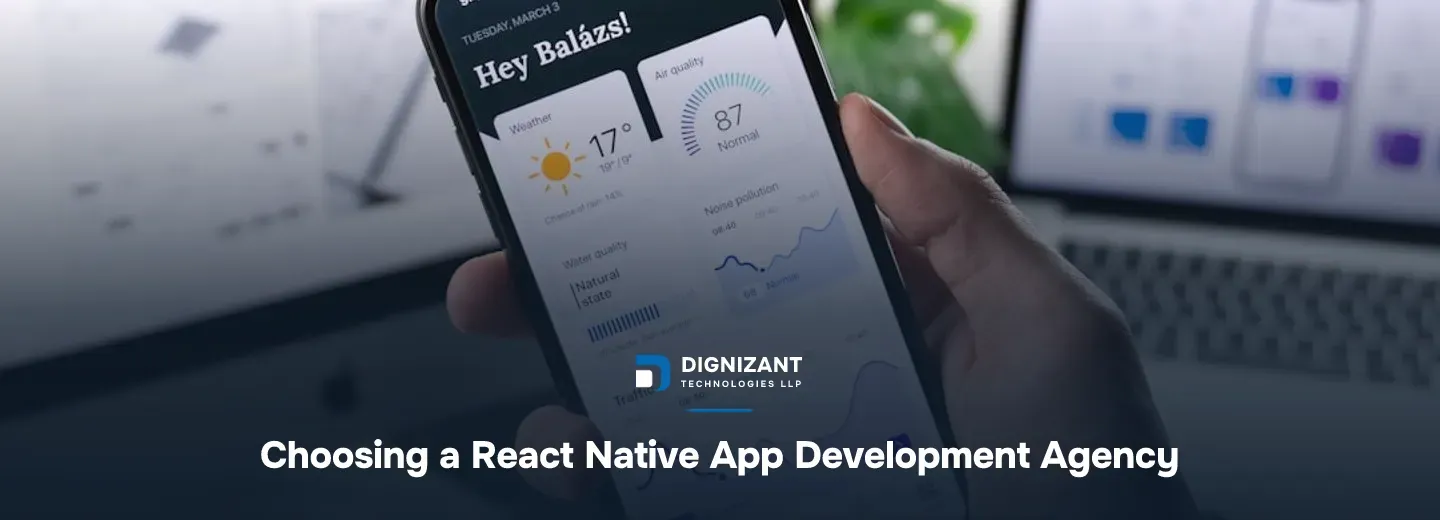
Photo by Balázs Kétyi on Unsplash
Uploaded
29 August, 2026
Read Time
7 Minutes
Views
21 views
Why React Native Still Makes Sense
React Native lets one codebase run on iOS and Android, with 70 to 90 percent of the code shared between platforms depending on how much native functionality your app needs. That's the whole pitch, and it still holds up. You get one team, one release cadence, and roughly half the build time compared to writing separate native apps.
The catch is that "one codebase" does not mean "no native work." Camera integrations, push notifications, payment SDKs, and background location tracking often need native modules written in Swift or Kotlin regardless of framework. A react native app development agency worth hiring will tell you this upfront instead of pretending cross-platform means zero native code.
Meta maintains React Native as an open source project, and its own documentation is the best reference for what the framework can and can't do out of the box. Any agency you talk to should be fluent in that documentation, not just in marketing language about "write once, run anywhere."
What an Agency Actually Does Differently Than a Freelancer
Hiring a single React Native developer is cheaper per hour, but it shifts risk onto you. One person going on leave, missing a deadline, or hitting a bug outside their experience stalls the whole project. We've written in detail about that trade-off in Hire React Native Developer: Costs, Vetting, Hiring Models, so this piece focuses on the agency side specifically.
An agency gives you a team structure instead of a single point of failure:
- A project manager or lead who owns timeline and scope
- 1 to 3 developers depending on app complexity, so work continues if one person is out
- A QA person testing on real devices, not just simulators
- A designer who hands off screens in a format developers can actually build from
- Backend or DevOps support if your app needs a server, database, or API layer
That structure costs more per hour than a solo freelancer. But it costs less in total risk, because a bug or delay doesn't stop the whole project.
Realistic Cost Bands for React Native Projects
Cost depends on three things: how many screens the app has, how much custom native functionality it needs, and whether you need a backend built alongside it. Using a realistic $10 to $15 per hour band for offshore development work, here is how that breaks down by project type.
Project type | Typical scope | Estimated hours | Cost range |
|---|---|---|---|
Simple MVP | 5-10 screens, no backend, basic auth | 300-500 hours | $3,000-$7,500 |
Standard business app | 10-20 screens, custom backend, push notifications | 600-1,000 hours | $6,000-$15,000 |
Marketplace or ecommerce app | 20-40 screens, payments, search, inventory sync | 1,200-2,000 hours | $12,000-$30,000 |
Complex app with native modules | Camera, AR, offline sync, background services | 1,800-3,000 hours | $18,000-$45,000 |
These ranges assume a small dedicated team working efficiently, not a single junior developer stretching the timeline. If you're building something closer to a full storefront, our ecommerce app development page covers scope specific to that category, since payment flows and inventory sync add hours the table above doesn't fully capture on their own.
A React Native MVP with 5 to 10 screens and no custom backend genuinely runs $3,000 to $7,500 in development hours. Anything quoted well under that number usually means fewer hours than the scope needs, not a better deal.
Red Flags When Vetting an Agency
Not every agency claiming React Native expertise has actually shipped apps to the App Store and Google Play under real load. Here's what to check before signing anything.
- Ask for App Store and Play Store links, not just screenshots. A live app tells you more than a portfolio deck.
- Ask which native modules they've written from scratch. If every past project used only off-the-shelf libraries, they haven't dealt with the harder problems yet.
- Ask how they handle React Native upgrades. The framework releases new versions regularly, and an agency that's never migrated a client off an old architecture version doesn't have real maintenance experience.
- Ask about their testing process. Simulator-only testing misses real device issues like camera permission flows, background app behavior, and battery-drain bugs.
- Ask who owns the code and app store accounts once the project ends. This should be you, not the agency, and it should be in the contract.
Fixed Price vs Hourly vs Dedicated Team
Each pricing model suits a different kind of project, and picking the wrong one causes more friction than picking the wrong hourly rate.
Fixed price works well when scope is locked and unlikely to change, like a simple MVP with a defined feature list. You know the total cost going in, but any added feature mid-project triggers a change order and a renegotiation.
Hourly billing suits projects where scope will shift as you learn from early users. It's more flexible but requires you to actually track hours and stay engaged week to week, or costs can drift.
Dedicated team billing works best for apps expected to grow over 12 months or more, where you want the same developers staying on past launch for updates and new features. This is usually the model for anything approaching the marketplace or complex-app rows in the table above.
Our related piece, Hire React Native Developers: Costs, Vetting, Timelines, goes deeper into how these models play out over a full project timeline if you want the extended version.
How Long a Real Project Takes
Timeline depends on the same three factors as cost: screen count, native complexity, and backend needs.
- A simple MVP with no backend: 6 to 10 weeks
- A standard business app with a custom backend: 10 to 16 weeks
- A marketplace or ecommerce app: 16 to 24 weeks
- A complex app with heavy native integration: 20 to 32 weeks
These numbers assume the client provides design assets and content on time and answers review feedback within a few days, not weeks. Slow client-side turnaround is the single biggest cause of timeline overrun, more than any technical issue.
What Good Communication Looks Like Mid-Project
A good agency doesn't disappear between kickoff and delivery. Expect a working build you can install on your own phone within the first 2 to 3 weeks, even if it's just navigation and placeholder screens. That early build tells you whether the team understands your product, before real money is spent on features built the wrong way.
Weekly or biweekly demos, not just status emails, should be standard. If an agency can't show you a running build a month into the project, that's worth asking about directly.
Our own engineering team's take: the projects that go smoothly are the ones where the client sees a build in week 2, not week 10. If nothing is installable a month in, something in the process is wrong, not just slow.
Where React Native Fits Alongside Your Other Software
App development rarely happens in isolation. If the app is customer-facing, it needs to connect to whatever drives people to it in the first place, and our digital marketing team handles that side for clients who need both built together. If mobile is one piece of a larger platform, our general mobile app development page covers native iOS and Android options too, in case React Native isn't actually the right fit for your specific app.
That last point matters more than most agencies admit. React Native is excellent for content apps, marketplaces, social apps, and most business tools. It's a worse fit for apps needing heavy 3D rendering, complex AR, or extremely tight performance budgets, where fully native development still wins. A good agency tells you this before quoting, not after the project stalls.
Questions to Ask Before You Sign a Contract
Beyond the red flags above, a few direct questions during the sales conversation reveal a lot:
- How many React Native apps has your team shipped that are still live today?
- What happens if a feature turns out to need a native module you haven't built before?
- Who tests on real Android devices, not just iOS simulators?
- What's included in post-launch support, and for how long?
- Can I talk to the actual developers, not just the account manager?
An agency confident in its work answers these without hesitation. One that gets vague or redirects to a sales pitch is telling you something too.
Working With Dignizant
Dignizant builds React Native apps with the team structure described above: a project manager, dedicated developers, QA on real devices, and a clear handoff of code and accounts once the project ships. If you're evaluating agencies for an upcoming app, reach out to Dignizant with your scope and we'll walk through realistic hours, cost, and timeline for your specific project before you commit to anything.
Enjoyed this? Subscribe to our newsletter for more like it, straight to your inbox.
Latest Articles
Need a CMS built for developers, not fighting against them? Dignizant builds headless and custom CMS platforms. See scope, cost, and timeline.

Planning custom content management system development? See real costs, timelines, build vs buy trade-offs, and how Dignizant's process works.

Looking for a reactjs developer for hire? See what's included, how the engagement runs, real cost bands, and the questions to ask before you sign.
FAQs
Ready to Start Your Project?
Talk to our team about turning this into a real, working product.